


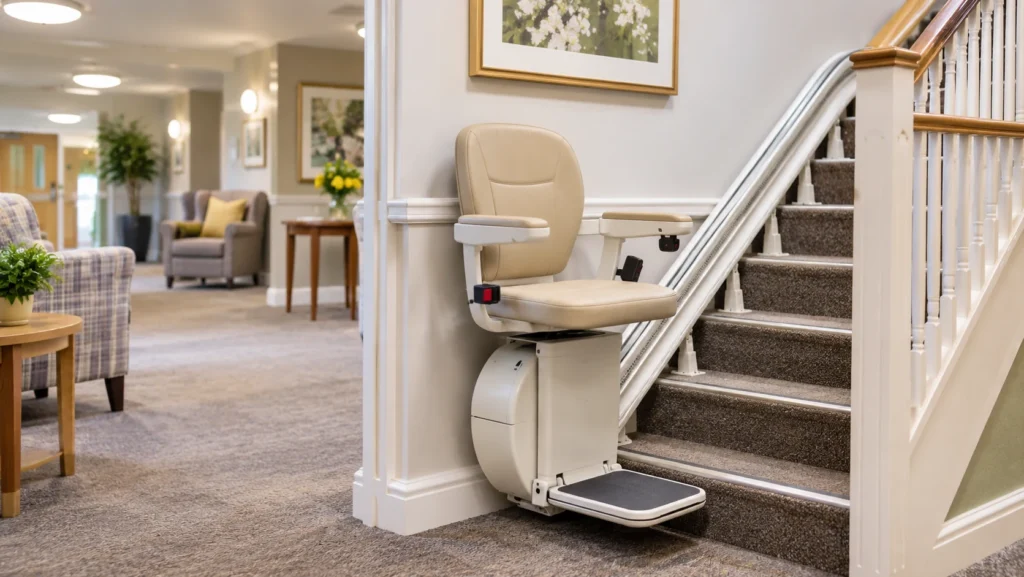
If your stairlift has stopped working, the cause may be something straightforward, such as an obstruction, an interrupted charging supply or a seat that has not returned to its travelling position.
Other stairlift problems need an engineer to diagnose and repair them. The checks below can help you identify common issues without opening covers or interfering with safety devices. Always follow the instructions for your particular make and model.
If your stairlift stops while you are on the stairs, remain seated with your seatbelt fastened and summon assistance. Do not attempt to climb off onto the staircase without appropriate help.
What to Check First When Your Stairlift Stops Working
Before arranging a repair, check the following if you can do so safely:
- The key switch and user-operated power switch are in the correct positions.
- The seat is fully returned to its travelling position.
- Any armrests required for operation are lowered.
- There are no visible objects obstructing the footrest, carriage or rail.
- The charger is plugged in and its wall socket is switched on.
- The display is showing a fault code or warning message.
The controls and safety features vary between models. Check your user manual rather than trying a reset procedure intended for a different stairlift.
Power Supply and Charging Problems
Many stairlifts run on rechargeable batteries. The mains supply powers the charger, so a stairlift may continue moving for a while after the charger has been switched off, then stop once the batteries run down.
Check that the charger is connected to its normal socket and switched on. If your model charges at designated points, it also needs to be parked correctly to recharge.
Do not remove covers, inspect internal wiring or attempt electrical repairs. If the charging supply appears correct but the stairlift remains unresponsive, arrange a professional assessment.
Will a Stairlift Work During a Power Cut?
Many battery-powered stairlifts can continue operating during a power cut, provided their batteries have sufficient charge. The number of journeys available depends on the model, battery condition and features being used.
Check your user manual and avoid unnecessary journeys until power is restored.
The Seat Is Not in Its Travelling Position
A swivel seat allows you to get on and off more easily at a landing. However, many stairlifts will not travel unless the seat has been returned fully to its normal position and locked into place.
Following your user instructions, check that the seat is correctly positioned. Some models also require an armrest to be lowered or another safety condition to be met before they will move.
Never force a swivel mechanism or bypass its safety switch. If the seat will not lock correctly, contact an engineer.
An Obstruction Has Activated a Safety Sensor
Stairlifts commonly have safety edges around the footrest and carriage. These can stop movement when they encounter an object on the stairs.
Check for visible obstructions such as shoes, bags or items resting against the rail. Remove an object only if it is safely accessible and the stairlift is stationary.
Do not reach beneath moving equipment or try to adjust a sensor. If the route is clear but the stairlift still will not move, the safety system may need checking.
Battery Problems
Batteries can lose capacity as they age, but a stairlift that will not move does not automatically need replacement batteries. A charging fault, incorrect parking position or another problem can produce similar symptoms.
Possible signs of a battery or charging issue include reduced travel between charges, charging warnings or difficulty completing a journey.
An engineer can test the batteries and charging system to identify the cause. Replacing parts without a diagnosis may leave the underlying fault unresolved.
The Stairlift Is Beeping or Showing a Fault Code
Beeping can indicate that a stairlift needs attention. Depending on the model, it may relate to charging, seat position, an obstruction or another operating condition.
Check the display and write down the exact code or message. Its meaning is specific to the manufacturer and model, so a code from one stairlift should not be interpreted using another model’s guide.
Avoid repeatedly switching the stairlift off and on to clear a warning. Follow only the reset instructions provided in your own manual or by your service provider.
The Remote Control Is Not Working
If the stairlift operates normally from its armrest control but does not respond to the remote, the problem may be with the remote rather than the stairlift itself.
Check or replace the remote’s batteries according to the user instructions. If it still does not work, the handset or receiver may need attention.
If neither control operates the stairlift, check for other warnings and arrange assistance if the basic checks do not resolve the problem.
Unusual Noises, Jerking or Repeated Stopping
Grinding noises, sudden jolts or repeated stopping should be investigated. These symptoms can have several causes, including worn components or problems with the drive system.
Stop using the stairlift if its movement feels unsafe. Do not apply lubricant, tighten components or adjust the rail unless your manufacturer’s instructions specifically identify this as a user maintenance task.
A qualified engineer can inspect the equipment and recommend the appropriate repair.
When to Call a Stairlift Repair Engineer
Arrange professional help if the basic checks do not restore normal operation, a warning keeps returning or the stairlift develops unusual movement or noise.
Before calling, note the make and model, any displayed code, where the stairlift has stopped and whether it responds to either control. This information can help the repair team assess the problem.
Deltron Lifts provides stairlift repairs and servicing. Contact our team with the details of your stairlift and the problem you are experiencing so we can advise on the next step.
Frequently Asked Questions
Why has my stairlift suddenly stopped working?
Common causes include an interrupted charging supply, depleted batteries, an obstruction or a seat that is not locked in its travelling position. A fault code may help identify the issue.
Why is my stairlift beeping but not moving?
The warning could relate to charging, a safety switch or another fault. Check your model’s display and user manual, as beeping does not have one universal meaning.
How do I reset my stairlift?
There is no single reset procedure for every stairlift. Follow the instructions for your exact model or ask your service provider. Do not bypass safety devices or repeatedly reset a recurring fault.
Can I repair a stairlift myself?
Limit your checks to the user tasks described in your manual, such as checking switches, seat position and safely accessible obstructions. Internal electrical work, battery replacement and mechanical repairs should be handled by a qualified engineer.
Why will my stairlift only move in one direction?
An obstruction or activated safety edge may prevent travel in one direction. Other faults can cause similar behaviour. Check for visible objects, record any warning code and seek help if the problem continues.
If your stairlift has stopped working, don’t wait to take action. Identifying the cause quickly and getting in touch with the expert team at Deltron Lifts can restore your lift’s function and give you confidence that the problem will be resolved safely and professionally.

