


Lift Cleaning: A Practical Guide to Lift Hygiene
Regular lift cleaning keeps cabins welcoming, removes everyday dirt and helps building managers maintain good hygiene. Buttons, handrails, doors and floors all need attention, particularly in busy offices, residential blocks, shopping centres and healthcare buildings.
However, cleaning a lift requires care. Excess moisture, abrasive products and unsuitable chemicals can damage finishes or affect electrical components. This guide explains what to clean, how often to clean it and which tasks need specialist support.
Why Is Lift Cleaning Important?
Lift interiors collect fingerprints, dust, litter and moisture throughout the day. Without regular cleaning, surfaces become marked, floors look worn and spills can create slip hazards.
Lift hygiene also means paying attention to frequently touched surfaces. Landing call buttons, cabin controls and handrails should form part of the building’s cleaning schedule.
Cleaning and maintenance serve different purposes. Cleaning removes dirt and contamination; servicing checks the lift’s mechanical and electrical condition. A clean cabin does not confirm that a lift is mechanically safe, and routine servicing does not replace daily housekeeping.
How Often Should a Lift Be Cleaned?
The right cleaning frequency depends on passenger traffic, the building’s use and how quickly dirt accumulates.
For many buildings, a daily clean is a sensible starting point. Busy lifts may need more frequent attention to buttons, handrails and floors, while quieter buildings can adjust their schedule to suit actual use.
Spills, broken glass and other hazards need prompt attention. More detailed cleaning of corners, finishes and accessible fittings can be scheduled alongside routine work.
Review the results regularly. If a cabin becomes visibly dirty between visits, the cleaning schedule needs adjusting.
How to Clean a Lift
Follow the lift manufacturer’s cleaning instructions and the building’s agreed procedures. Use products suitable for each surface, and arrange the work so passengers cannot enter an area being cleaned.
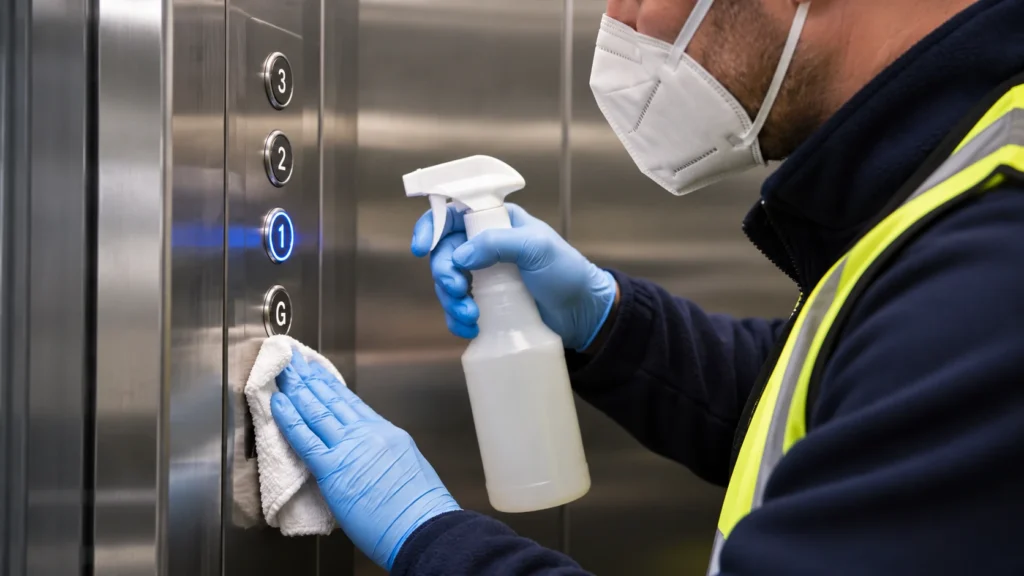
Lift Buttons and Control Panels
Use a soft cloth lightly dampened with a suitable cleaning product. Apply the product to the cloth rather than spraying it directly onto buttons, displays or panel joints.
Avoid soaking the cloth or allowing liquid to collect around controls. Touchscreens and specialist finishes may have specific cleaning requirements.
Handrails, Walls and Doors
Wipe accessible surfaces with a soft, non-abrasive cloth and a compatible cleaner. Pay particular attention to handrails and areas around the doors where fingerprints collect.
For brushed stainless steel, follow the direction of the grain. Avoid abrasive pads and harsh products that could scratch or discolour the finish.
Lift Floors
Remove loose dirt before cleaning the floor with a method suitable for its material. Carpet, vinyl, stone and metal flooring require different treatment.
Use moisture sparingly and leave the floor dry before returning the lift to normal use. Do not allow cleaning water to run into door tracks, gaps or electrical fittings.
Door Thresholds
Keep accessible thresholds free from loose litter and visible dirt, following the manufacturer’s instructions.
Do not force doors open, insert tools into gaps or remove covers. Debris trapped inside a door mechanism should be reported to the lift maintenance provider.
Choosing Lift Cleaning Products and Equipment
Routine cabin cleaning usually needs straightforward equipment: soft microfibre cloths, suitable surface cleaners and floor-cleaning tools appropriate to the finish.
Choose products for the material being cleaned. A cleaner suitable for stainless steel may be unsuitable for a coated panel, mirror or touchscreen.
Where disinfection is required, check compatibility and follow the product’s instructions, including its contact time. Cleaning removes dirt; disinfection is a separate process and should not be assumed simply because a surface looks clean.
Avoid pressure washing, uncontrolled spraying or excessive water around lift equipment.
Scenic Lift Cleaning
Scenic lifts need particular attention to glass, where fingerprints, streaks and dust can be especially visible.
Accessible interior glass can be cleaned using an appropriate product and a soft cloth, taking care around seals and adjacent finishes.
External glazing, high-level surfaces and glass facing into the lift shaft require a planned specialist approach. Cleaners should never lean outside the cabin or attempt to access the shaft to reach these areas.
When Is Specialist Lift Cleaning Needed?
Routine cleaning staff can usually look after accessible cabin surfaces when they have suitable instructions. Lift pits, shafts, car roofs and machinery areas require specialist arrangements because access introduces hazards beyond ordinary cleaning.
Specialist support may also be needed after building works, flooding, significant contamination or persistent debris problems.
If cleaning reveals damaged controls, unusual noises, sticking doors or water entering the lift, report the issue to the maintenance provider.
Keeping Your Lift Clean and Reliable
A practical cleaning schedule should identify who cleans each area, which products they use and how they report defects. This helps maintain consistent standards without putting equipment or cleaning staff at risk.
At Deltron Lifts, we can help you assess your lift’s condition and identify appropriate maintenance or specialist cleaning requirements. Contact our team to discuss your building and the support you need.
Frequently Asked Questions
Can you spray cleaner directly onto lift buttons?
Apply a suitable product to a cloth instead. Direct spraying can allow liquid to enter gaps around buttons and electrical components.
Does lift cleaning replace servicing?
No. Cleaning looks after surfaces and hygiene, while servicing addresses the lift’s mechanical and electrical condition. Both need their own schedule.
Who should clean a lift pit or shaft?
These areas require specialist access arrangements. Building cleaning staff should not enter them as part of routine cabin cleaning.
How do you clean stainless steel lift doors?
Use a soft cloth and a manufacturer-approved cleaner, working with the grain on brushed finishes. Avoid abrasive pads and excessive moisture.

