


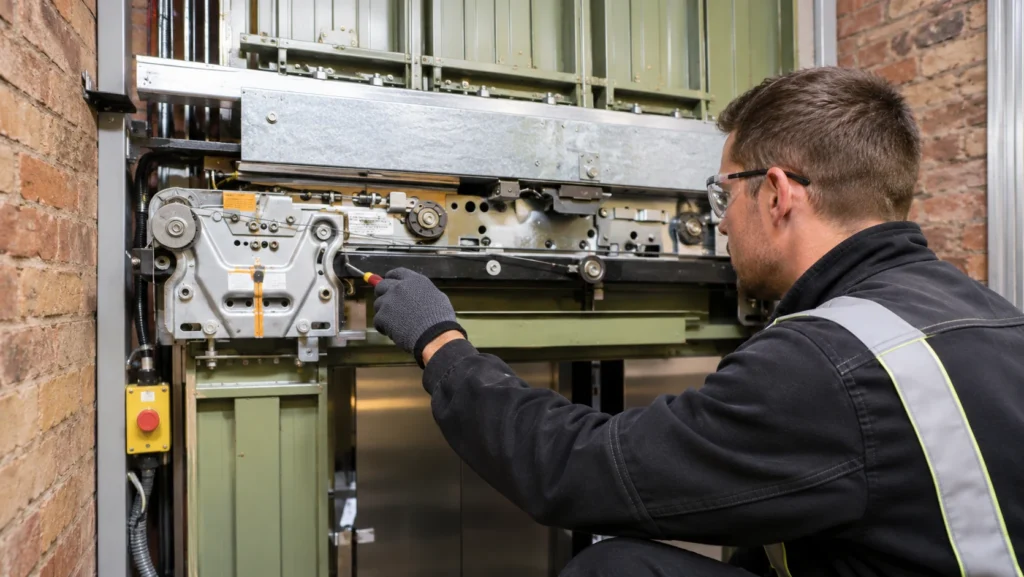
A lift service is a planned maintenance visit to check the equipment’s condition, carry out scheduled maintenance and identify issues that need attention. It helps keep the lift reliable and gives building managers a clearer picture of its ongoing maintenance needs.
The work depends on the lift’s design, age, usage and maintenance programme. Not every component needs the same attention at every visit, and replacement parts or additional repairs may fall outside the agreed contract.
Here is what you can generally expect before, during and after a lift service visit.
Before the Engineer Arrives
Make sure the engineer can access the building and any relevant locked areas, including the lift machinery space where applicable. Someone on site should be available to explain any recent problems and confirm access arrangements.
Report issues even if the lift is currently working. Intermittent door faults, unusual noises, uneven stopping or repeated breakdowns can help the engineer identify developing problems.
It is also sensible to notify building users that the lift will be temporarily unavailable. Where people depend on it for access, plan the timing and any alternative arrangements in advance.
What Happens During a Lift Service?
The engineer will normally report to the site contact, review relevant information and establish safe working arrangements before starting work.
The visit then follows the maintenance programme for that equipment. This may include checking operation, inspecting components, cleaning selected mechanical areas, lubricating specified parts and making adjustments where appropriate.
Doors and Door Operation
Lift doors are used repeatedly throughout the day, making their condition and operation an important part of maintenance.
Checks may cover opening and closing performance, door components, protective devices and interlocks. The engineer will look for wear, damage or adjustment issues that could affect operation.
Travel, Ride Quality and Floor Levelling
The engineer may assess how the lift starts, travels and stops, including whether it levels correctly at landings.
Unusual vibration, noise or inconsistent movement can indicate a need for further investigation. Reporting when and where these symptoms occur helps, particularly if they are intermittent.
Drive Equipment and Mechanical Components
The components checked depend on the type of lift. A traction lift and a hydraulic lift have different maintenance requirements.
Scheduled work may include attention to drive equipment, brakes, suspension components or hydraulic equipment, as applicable. The maintenance programme determines which tasks are due at each visit.
Controls, Alarms and Other Systems
Relevant checks may also cover controls, indicators, alarm equipment and emergency communication systems, according to the lift’s maintenance requirements.
The engineer records defects or concerns and explains any further action needed. Routine servicing does not mean every component is dismantled or every possible fault can be ruled out.
Will the Lift Be Unavailable During Servicing?
Yes, you should expect the lift to be unavailable for at least part of the visit. The engineer needs to control access and prevent normal passenger use while carrying out work.
The length of the interruption depends on the equipment and the tasks being completed. If your building has only one lift, discuss access needs when arranging the visit.
Never return a lift to use until the engineer has confirmed that it can be used.
How Long Does a Lift Service Take?
There is no single duration that suits every lift. The number of floors served, equipment type, access arrangements and scheduled tasks all affect the time required.
A straightforward planned visit will differ from one involving fault investigation or additional work. Your maintenance provider should be able to advise on the expected disruption for your equipment.
The useful measure is whether the scheduled work has been completed properly and documented clearly.
What Should You Receive After the Visit?
You should receive a service record explaining the work completed, any defects identified and the recommended next steps.
It should help you understand:
- Whether the lift has been returned to use.
- Whether any faults or outstanding issues remain.
- Whether further investigation, repairs or replacement parts are needed.
- Whether additional work requires approval or a quotation.
Keep service records accessible alongside other lift documentation. They help you track recurring problems, review recommendations and plan expenditure.
If a report is unclear, ask for an explanation of the issue, its urgency and what action you need to take.
What Happens if the Engineer Finds a Fault?
Some adjustments or minor issues may be addressed during the visit, depending on the work involved and your contract.
Other faults require parts, specialist investigation or a separate appointment. Your provider should explain what is needed and whether the work is included in your agreement.
If the engineer identifies a condition that makes continued use unsafe, the lift may need to remain out of service until the issue is resolved. Deltron’s lift repairs and breakdown support can help address faults identified during maintenance or normal operation.
Is a Lift Service the Same as a LOLER Inspection?
No. Routine maintenance and a LOLER thorough examination have different purposes.
Servicing involves maintaining the equipment, checking its condition and completing scheduled tasks. A thorough examination is a systematic assessment by a competent person to identify defects that are, or could become, dangerous.
Where LOLER applies, equipment used to lift people generally requires thorough examination every six months, while goods-only lifting equipment generally requires examination every 12 months, unless an examination scheme specifies different intervals.
These are examination intervals, not a universal servicing schedule. Regular maintenance does not replace a required LOLER thorough examination, and a thorough examination does not replace servicing.
How Often Should a Lift Be Serviced?
Servicing frequency should reflect the manufacturer’s recommendations, the lift’s condition, how frequently it operates and its working environment.
A heavily used passenger lift may need a different programme from a lightly used goods lift. Age, recurring faults and exposure to demanding conditions can also affect maintenance needs.
Your provider should explain the proposed visit frequency and review it when circumstances change. Deltron’s lift maintenance and servicing supports planned care suited to the equipment and building.
Arrange Lift Servicing with Deltron Lifts
At Deltron Lifts, we help building owners and managers look after their lifts through planned maintenance, fault investigation and repair support.
Contact our team to discuss your equipment, current servicing arrangements and any concerns about its performance. We can help you understand the maintenance support your building needs.

