


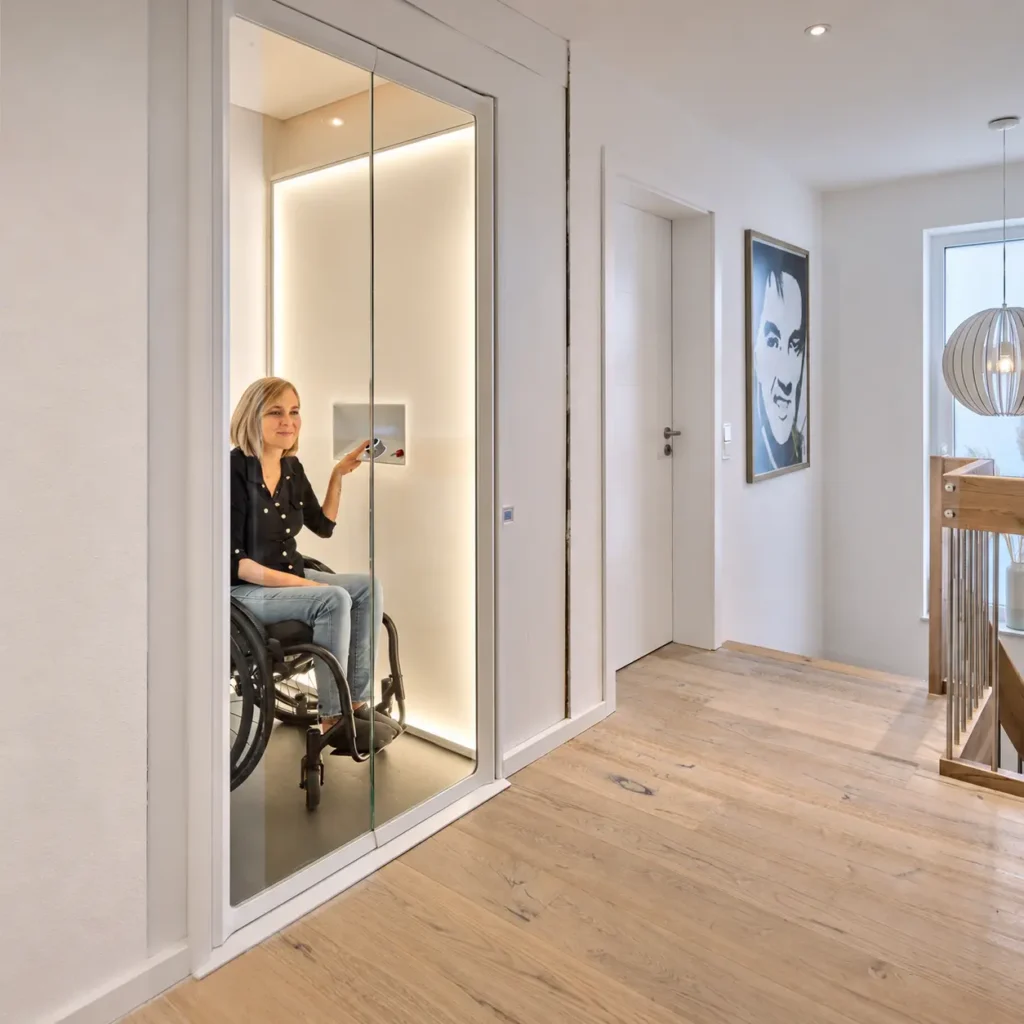
Installing a home lift is one of the most considered purchases a homeowner makes. Done well, it adds lasting value to a property, significantly improves day-to-day quality of life, and future-proofs a home for decades. Done poorly, or with the wrong lift type for the space, it creates ongoing frustration and cost.
This guide covers everything you need to know before buying a home lift in the UK, including the different lift types available, how to choose the right one for your home, what the installation process involves, and what to budget for. Whether you are planning a new build, upgrading an existing property or looking for an accessibility solution, this is the starting point.
Why People Install Home Lifts
The reasons for installing a home lift are more varied than many people assume. Accessibility is the most common driver. A lift provides safe, independent movement between floors for someone with reduced mobility, a disability or a condition that makes stairs difficult or dangerous. For older homeowners, a home lift is one of the most effective ways to remain living independently in a property they love rather than downsizing or moving to a care setting.
But accessibility is not the only reason. Home lifts are increasingly installed in new builds and renovations as a lifestyle and design choice — a premium feature that adds convenience, reflects an investment in long-term liveability and, in the case of well-designed models, makes a genuine design statement in the home.
For multi-generational households where different generations share a property across multiple floors, a home lift removes a significant daily friction point. For homeowners with heavy items to move between floors regularly, a residential lift adds genuine practical utility beyond personal mobility.
Types of Home Lift Available in the UK
Choosing the right lift type is the most important decision in the buying process. The options differ significantly in terms of how they work, the space they require, how they are installed and what they look like.
Through floor lifts
A through floor lift travels vertically between two floors through a platform in the ceiling. It does not require a separate shaft or significant structural alteration, making it one of the most practical solutions for existing properties where space is limited. Installation is typically straightforward and can often be completed in a day or two. Through floor lifts are available in open and enclosed configurations and can accommodate wheelchair users. They are a cost-effective and minimally disruptive option for homeowners who need to move between two floors without undertaking major building work. View our through floor lift range here.
Platform lifts for residential use
A residential platform lift provides vertical travel in an open or semi-enclosed platform, typically within a dedicated shaft space. Platform lifts are suitable for travel across multiple floors and can be specified with a range of finishes and configurations to suit the home. They offer greater capacity and a more robust feel than a through floor lift, and are a good choice for homeowners who want a longer-term, more permanent solution. View our platform lift range here.
Aritco home lifts
For homeowners who want a home lift that genuinely complements the design of a modern or premium property, the Aritco home lift range is the benchmark. Deltron Lifts is an approved Aritco partner, supplying and installing the full range of Aritco home lifts across the UK.
The Aritco range comprises three models designed for different residential applications:
- The Aritco HomeLift is the flagship model, combining outstanding design with smart engineering. Available in a wide range of finishes, glass configurations and customisation options, it is designed for homeowners who want a lift that feels like a considered part of the home rather than a functional addition. It travels on a patented rack-and-pinion drive system that requires no machine room and no pit in most configurations, and can be installed in as little as a day.
- The Aritco HomeLift Access is designed specifically for wheelchair users, with a larger platform and additional accessibility features. It meets the technical requirements for accessible residential lift design and provides full independence for users with mobility challenges.
- The Aritco HomeLift Compact is the solution for homes where space is a primary constraint. Its compact footprint makes it suitable for properties where a standard home lift would not fit, without compromising on build quality or design.
Stairlifts
A stairlift is not a lift in the traditional sense but is the most common mobility solution for homeowners who need help with stairs and are not looking for a full floor-to-floor lift. Stairlifts are the most affordable option and the quickest to install, but they do not provide the independent access between floors that a platform or through floor lift does. They are not suitable for wheelchair users without a transfer. View our stairlift installation page here.
Step lifts
A step lift provides access over a small number of steps (typically one to six) rather than between full floors. They are ideal where a few steps create an access barrier within the home and a full stairlift or platform lift would be disproportionate. View our step lift range here.

How to Choose the Right Home Lift for Your Property
Several factors determine which lift type is the best fit for a specific home and situation.
The number of floors and travel distance
A through floor lift is typically limited to two floors. If you need to travel across three or more floors, a platform lift or home lift with a proper shaft is more appropriate. Travel distance also affects the type of drive system that is practical.
Available space
The footprint available for the lift significantly affects which options are realistic. A through floor lift requires the least space and the least structural alteration. A platform lift or home lift requires a shaft space that needs to be factored into the building layout. In existing properties, this often involves converting a cupboard, part of a room or a section of a hallway. In new builds, the shaft can be incorporated into the design from the outset. The Aritco HomeLift Compact is specifically designed for homes where the available footprint is the primary constraint.
Wheelchair access requirements
If the lift needs to accommodate a wheelchair, the platform dimensions are the critical specification. Standard through floor lifts may not be large enough for a powered wheelchair. The Aritco HomeLift Access and larger platform lift models are designed specifically for wheelchair accessibility. Always confirm platform dimensions against your wheelchair’s dimensions before specifying.
Design and aesthetics
For homeowners who care about how the lift looks and feels within the home, this is a genuine differentiator between products. A functional through floor lift and a premium Aritco HomeLift are both good solutions to different briefs. If the lift is a design feature as much as a functional requirement, the Aritco range offers a level of customisation — glass panels, cabin finishes, lighting, control panel design — that no other residential lift product currently matches.
Planning permission
In most cases, installing a home lift in an existing dwelling does not require planning permission as it falls within permitted development. However, listed buildings, properties in conservation areas, and certain new developments may have restrictions. Always check with your local planning authority before committing to an installation if your property has any of these designations.
Funding and grants
If the lift is being installed for accessibility reasons, it may be eligible for funding through a Disabled Facilities Grant (DFG). DFGs are means-tested grants available through local authorities to help fund home adaptations for disabled people. The maximum grant is currently £30,000 in England. Our guide to Disabled Facilities Grants and accessibility funding covers the application process in full.
What the Installation Process Involves
Understanding what installation involves helps homeowners plan realistically and avoid surprises.
- Initial consultation and site survey. The first step is a site visit or video survey to assess the property, confirm the space available, identify any structural considerations and recommend the most suitable lift type and configuration. For Aritco installations, this also covers the customisation options available for the specific layout.
- Specification and quote. Based on the survey, your installer provides a detailed specification and a fixed quote covering the lift, installation, commissioning and warranty. For Aritco home lifts, this is also where finish selections, glass configurations and any bespoke options are confirmed.
- Builders work. Most home lift installations require some preparation of the installation space before the lift arrives. This might involve strengthening a floor, creating a shaft space, installing a power supply or making good around the opening. The extent of builders work depends on the lift type and the existing property layout. Your installer should provide a full builders work specification so you can appoint a contractor or do the work yourself before the lift arrives.
- Installation. The lift installation itself is typically completed in one to three days depending on the lift type and complexity. Aritco home lifts are engineered for straightforward installation, with most standard installations completed in one to two days. The installer handles delivery, assembly, connection to the power supply and initial commissioning.
- Commissioning and handover. Once installed, the lift is tested fully, all safety systems are verified, and the installer demonstrates operation to the homeowner. A full handover pack is provided including warranty documentation, user manual and, for lifts subject to LOLER, a commissioning certificate.
Maintenance and Ongoing Costs
Like all mechanical equipment, a home lift requires regular maintenance to stay in safe, reliable working order. For lifts installed in a private dwelling used exclusively by the occupant, LOLER does not apply. However regular servicing is still strongly recommended and most manufacturers require it to maintain the warranty.
For Aritco home lifts, Deltron provides specialist Aritco servicing and maintenance using genuine Aritco parts and trained engineers. A planned maintenance visit at least once a year is recommended for a home lift in normal domestic use.
If the lift is in a property that is let, used by employees, or accessible to members of the public, LOLER applies and the six-monthly examination requirement is triggered. Speak to your installer to confirm the applicable examination regime for your specific situation.
Is a Home Lift Worth It?
For homeowners who need one for accessibility reasons, the answer is almost always yes. The alternative, moving to a single-storey property or a care setting, is typically more expensive, more disruptive and represents a significant loss of independence and quality of life. A home lift that is well specified and properly installed typically adds value to a property as well as to the daily life of its occupants.
For homeowners installing a lift as a lifestyle choice or future-proofing measure, the calculation is different and more personal. The Aritco home lift range has made the design case for residential lifts significantly more compelling, bringing a product to market that competes aesthetically with high-end architectural fittings rather than being purely functional equipment.
Our post on whether home lifts are worth it explores the decision in more depth for homeowners still weighing it up.

Next Steps: Getting a Quote from Deltron
Deltron Lifts is an approved Aritco partner and supplies and installs the full range of home lifts across the UK, from through floor lifts and platform lifts to the complete Aritco HomeLift range. We provide free site surveys and no-obligation quotes tailored to your specific property and requirements.
View our home lift range or contact our team to arrange a consultation. You can also call us on 0330 124 2169.
Frequently Asked Questions About Home Lifts
What types of home lift are available in the UK?
The main options are through floor lifts, residential platform lifts and purpose-designed home lifts such as the Aritco HomeLift range. Stairlifts and step lifts provide mobility assistance over stairs and steps but do not provide full floor-to-floor access in the same way. The right choice depends on the number of floors, available space, accessibility requirements and the homeowner’s design preferences.
Do I need planning permission for a home lift?
In most cases no. Installing a home lift in an existing dwelling typically falls within permitted development rights and does not require planning permission. However listed buildings, properties in conservation areas and some new developments may have restrictions. Always check with your local planning authority if your property has any of these designations before committing to an installation.
How long does it take to install a home lift?
This varies by lift type. Through floor lifts can typically be installed in a day. Aritco home lifts are designed for straightforward installation and most standard configurations are completed in one to two days. More complex installations involving significant shaft construction or multiple floors may take longer. A full timeline will be provided as part of your quote.
Can a home lift accommodate a wheelchair?
Yes, but platform dimensions vary between models. If the lift needs to accommodate a wheelchair, confirm the platform size against your wheelchair’s dimensions before specifying. The Aritco HomeLift Access is specifically designed for wheelchair accessibility with a larger platform and additional access features.
Can I get a grant to help pay for a home lift?
If the lift is being installed for accessibility reasons, you may be eligible for a Disabled Facilities Grant through your local authority. The maximum grant is currently £30,000 in England. Eligibility is means-tested. Our guide to Disabled Facilities Grants covers the full application process.
Does a home lift need to be serviced regularly?
Yes. Regular maintenance is recommended for all home lifts and is typically required to maintain the manufacturer warranty. For lifts in private dwellings used exclusively by the occupant, LOLER statutory examinations do not apply. However if the property is let, used by employees or accessible to members of the public, LOLER applies and regular thorough examinations are required.
What makes Aritco home lifts different from other options?
Aritco home lifts are designed to the same standard as premium architectural fittings, with extensive customisation options for finishes, glass, lighting and controls. They use a patented rack-and-pinion drive system that requires no machine room and no pit in most configurations, minimising the structural impact on the home. Deltron Lifts is an approved Aritco partner, supplying and installing the full range across the UK.

