


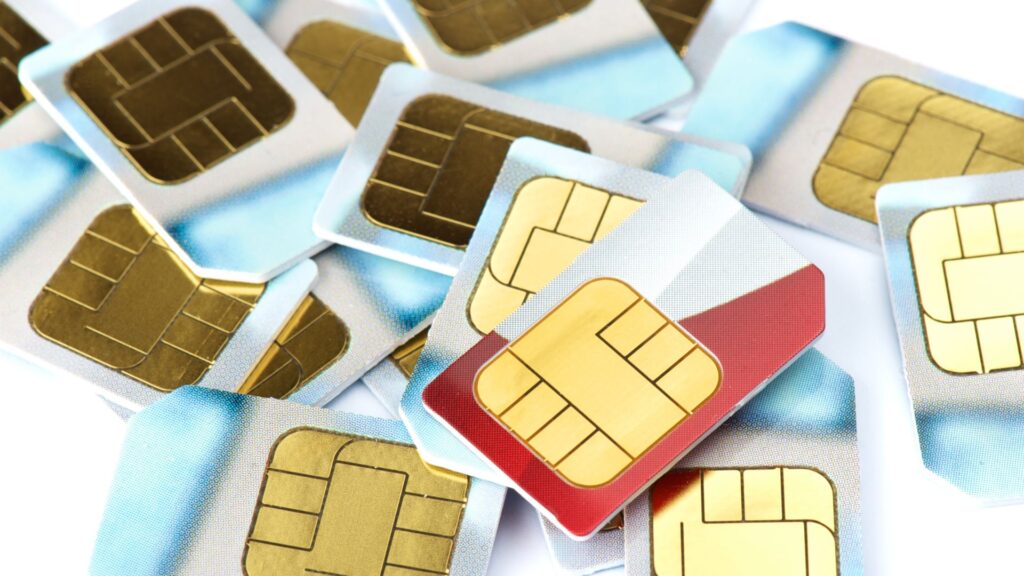
A lift SIM card is a mobile SIM fitted inside a lift’s emergency dialler, letting it call for help over the mobile network instead of an old analogue phone line. For lifts, the best choice is a multi-network (roaming) SIM, which automatically connects to whichever UK network has the strongest signal at that spot, rather than being tied to a single provider.
With the 2027 PSTN switch-off on the way, more and more lifts are moving from analogue lines to SIM-based connectivity. But not all SIMs are equal, and choosing the wrong one can quietly undermine a safety-critical system. Here’s what to look for and why it matters.
Why Lifts Are Moving to SIM-Based Connectivity
For years, most lift emergency phones called out over a traditional analogue line (the PSTN). That network is being switched off, with the changeover completing by 31 January 2027, so lifts need a new way to connect.
Mobile connectivity has become the go-to replacement, and it’s easy to see why. A SIM-based emergency dialler doesn’t depend on any fixed line or the building’s own phone or internet setup. It just needs a mobile signal, which makes it simpler to install and more resilient, especially in older buildings where running new cabling is a headache. For most lifts, a SIM is the most practical, cost-effective PSTN replacement available.
The Problem with Ordinary SIM Cards
Here’s where it gets important. You might think any mobile SIM would do the job, but a standard consumer SIM (the kind in your phone) is tied to one single network. That’s fine for everyday use, but a lift is a different situation entirely.
Lift emergency diallers often live in exactly the places mobile signal struggles to reach: basement plant rooms, underground car parks, lift shafts, and buildings with thick walls. If your single-network SIM happens to be on the one provider with weak coverage at that spot, you’ve built a single point of failure into a life-safety system. The one moment it needs to connect could be the moment it can’t.
For a system whose entire job is to work in an emergency, that’s a risk you don’t want to take.
Why Multi-Network Roaming SIMs Are Better for Lifts
This is what a multi-network roaming SIM solves. Instead of being locked to one provider, a roaming SIM can connect to any of the major UK networks, and it automatically picks whichever has the strongest signal at that location. If one network drops or is weak, it simply uses another.
For a lift, that’s exactly what you want:
- No single point of failure. If one network is weak in that basement, another can carry the call.
- Better coverage in difficult spots. Plant rooms, shafts, and car parks are far more likely to hold a connection.
- No manual intervention. The switching happens automatically, with no downtime and nothing for you to manage.
- Compliance confidence. A reliable connection is what BS EN 81-28 expects, including the ability to make those all-important test calls.
In short, a single-network SIM might work most of the time, but “most of the time” isn’t good enough for a lift emergency phone. Multi-network is the sensible default.
What to Look for in a Lift SIM
- Multi-network roaming as standard, not a single-network SIM.
- Suitability for 4G and 5G, so you’re not caught out by older networks being retired. (2G and 3G are already being phased out across UK providers.)
- Compatibility with your dialler. The SIM needs to work with your existing autodialler or GSM unit. Common lift comms brands include Avire, Memco, and similar, so check the make and model.
- Automated, logged test calls. The setup should support the 72-hour test calls the standard requires, ideally logged automatically.
- A managed solution. A SIM supplied and monitored specifically for lift use is far less hassle than a generic data SIM.
If you’re not sure what your lift currently uses, that’s fine, it’s exactly the kind of thing to check as part of a wider audit before the switch-off. Get in touch with us today, and we can help.
SIM, GSM Gateway, or New Dialler?
Where you land depends on what you’ve already got:
- If your lift has a modern dialler with a SIM slot, you may simply need to fit a compliant multi-network SIM and retire the analogue line.
- If your lift has an older, analogue-only dialler, you’ll likely need a GSM gateway or a new digital unit to add mobile connectivity. We cover that choice in more detail in our guide to preparing your autodialler for the switch-off.
Either way, the SIM inside should be multi-network. Getting that decision right is a small detail that makes a big difference to reliability.
Deltron Lifts can check what your lifts currently use and fit compliant, future-proof connectivity ahead of the 2027 deadline.
Frequently Asked Questions
What is a lift SIM card?
It’s a mobile SIM fitted inside a lift’s emergency dialler, allowing it to call a rescue service over the mobile network rather than an analogue phone line. It’s a common way to replace PSTN connectivity ahead of the 2027 switch-off.
Why does a lift need a multi-network SIM?
Because lift diallers are often in areas with poor signal, such as basements and shafts. A multi-network (roaming) SIM connects to whichever UK network is strongest at that spot, removing the single point of failure you’d get with a single-network SIM.
Can I use an ordinary phone SIM in a lift?
It’s not recommended. A standard consumer SIM is tied to one network, so if that network has weak coverage where the lift is, the emergency phone may fail to connect. A managed multi-network lift SIM is far more reliable.
Will a SIM-based lift phone meet BS EN 81-28?
A compliant SIM-based emergency phone can meet BS EN 81-28, provided it delivers reliable two-way voice, battery backup, and the required automatic test calls. Using a multi-network SIM helps ensure that reliability.
Do I need to replace my whole lift dialler to use a SIM?
Not necessarily. If your dialler already has a SIM slot, you may just need the right SIM. Older analogue-only diallers may need a GSM gateway or a new digital unit added.

